
Beginner's Guide to Collecting Pokemon Cards
Everything you need to know to get started in 2026 -- goals, budget, protection, rarities and first purchases
Thinking about starting a Pokemon card collection but not sure where to begin? You are not alone. With over 75 billion cards produced since 1996 and a global TCG market valued at 7.8 billion dollars in 2025, the world of Pokemon cards can feel overwhelming from the outside. But rest assured: getting started is much simpler than it seems, as long as you have the right roadmap.
This guide is designed to walk you through it step by step, whether you are a nostalgic adult rediscovering a childhood passion, a parent looking to share the adventure with your kids, or a curious newcomer drawn in by the buzz around the hobby. We will cover absolutely everything: why collect, what type of collection to build, how much to budget, where to buy, how to protect your cards, and which mistakes to avoid. Let's go.
Why collect Pokemon cards?
Before you spend a single dollar, ask yourself the fundamental question: why do you want to collect? The answer will shape every decision that follows, from the types of cards you seek to the way you manage your budget. There is no wrong answer, but there are very different approaches.
Nostalgia and enjoyment
This is the most common reason and, frankly, the best one. You grew up with Pokemon in the 90s or 2000s, had a binder bursting with cards, and want to recapture that feeling. Or maybe the Pokemon TCG Pocket app -- which generated over 1.3 billion dollars in revenue within a year -- gave you a taste for the physical hobby. The pure joy of holding a card in your hands, of pulling a holographic from a booster pack, is something no screen can replicate. If that sounds like you, you are in the right place.
The completion challenge
Some collectors love the challenge of completing an entire set. Each Pokemon expansion contains between 150 and 290 cards depending on the series, and filling the last empty slot in a binder delivers unmatched satisfaction. It is a clear, measurable, motivating goal.
Investment
Pokemon cards have proven they can be an interesting asset class. A Celebrations (25th anniversary) booster box bought for 180 euros in 2021 resells for around 500 euros in 2026. However, a word of caution: collecting purely to speculate is risky. The card market is volatile, and trends shift. If you want to explore the investment angle, we have written a comprehensive guide to investing in Pokemon in 2026 and a dedicated article on which booster packs to buy for investment.
The main collection styles: find yours
There are as many ways to collect as there are collectors. But most approaches fall into a few broad categories. Identifying yours will keep you from scattering your budget and energy.
Goal: obtain every card from a given expansion. Completion satisfaction, a well-organised binder. Budget varies by set size.
Collect every version of a particular Pokemon across all series. Pikachu, Charizard, Eevee... dozens of variants to hunt down.
Target full-art cards, illustration rares and SARs for their artistic beauty. A collection that looks like an art gallery.
Sealed products (booster boxes, ETBs) and graded singles. Focus on rarity and long-term appreciation potential.
Specialise in French, Japanese or other language printings. French 1st Edition cards are particularly sought after.
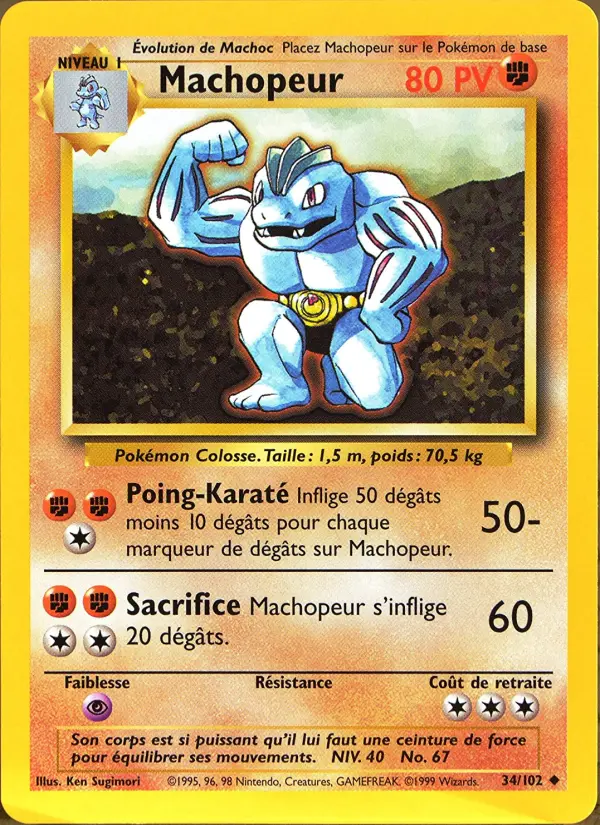
Focus on the Wizard block (1999-2003) or another era. Nostalgia and rarity guaranteed.
You can certainly combine several approaches. Many collectors have a "main project" (for example completing a set) alongside "side quests" (like tracking down every version of a favourite Pokemon). The key is to have a direction, even a rough one, so you don't buy at random and end up with hundreds of cards that tell no story.
Setting your budget: three tiers to get started
Budget is often the first question on everyone's mind. Good news: you can start a collection at almost any price point. The trap is not setting a budget at all and letting things spiral. Here are three realistic tiers with what each one actually gets you.
What you get: 1 Elite Trainer Box (ETB) containing 9-11 booster packs, sleeves, a die and a storage box. It is the best all-in-one product for a first purchase: complete and satisfying.
What you get: 1 ETB + 1 bundle (6 boosters) + protection accessories (100 penny sleeves, 25 toploaders, a 9-pocket binder) + $10-15 of targeted singles on Cardmarket or TCGPlayer.
What you get: 1 full booster box (36 sealed packs) + 1 ETB + a complete protection kit + a singles budget to fill gaps or pick up high-value cards. You can also keep the booster box sealed as an investment.
Regardless of your tier, set a monthly limit and stick to it. Card collecting is an addictive hobby -- cracking packs gives a genuine adrenaline rush -- and it is easy to overspend without realising it. A budget of 50 to 100 dollars per month is a sustainable pace for most collectors.
Where to buy Pokemon cards
One of the most common questions from beginners concerns purchasing channels. You have plenty of options, each with its own advantages and risks. Here is a comprehensive overview.
Brick-and-mortar retailers
Major chains like Target, Walmart, GameStop and Barnes & Noble (in the US) or Cultura, Micromania and Fnac (in Europe) regularly stock sealed Pokemon products. The advantage is clear: you see the product before you buy, pay no shipping, and face zero counterfeiting risk since these retailers source directly from the official distributors. Stock can be limited, however, especially for popular expansions.
Independent game stores are also excellent places to shop. They often provide personalised advice, host events and build a local community. Find one near you via the official Pokemon store locator.
Specialised online retailers
Many online shops specialise in the Pokemon TCG and offer excellent service. A few well-known options:
- PokeStation -- Large catalogue, 48-72h delivery across Europe
- Kairyu -- Pokemon TCG specialist with fast European shipping
- Poke-Geek -- ETBs, tins and booster boxes
- PokeBasement -- Good selection of ETBs and sealed products
Cardmarket & TCGPlayer: the go-to marketplaces for singles
Cardmarket (Europe) and TCGPlayer (North America) are the largest marketplaces for trading cards. They are the ideal places to buy individual cards, whether you need to fill gaps in a set or grab a specific chase card. Prices are transparent, sellers are rated, and both platforms offer buyer protection. For a beginner, they are the most efficient tools to avoid spending a fortune on boosters hoping to pull one particular card.
Understanding rarity symbols
When you open your first booster packs, you will quickly find yourself asking: "Is this card rare?" The answer is printed at the bottom right of every card in the form of a small symbol. Learning to read them is a fundamental skill for any collector.
Classic rarities
| Symbol | Rarity | Frequency | Typical value |
|---|---|---|---|
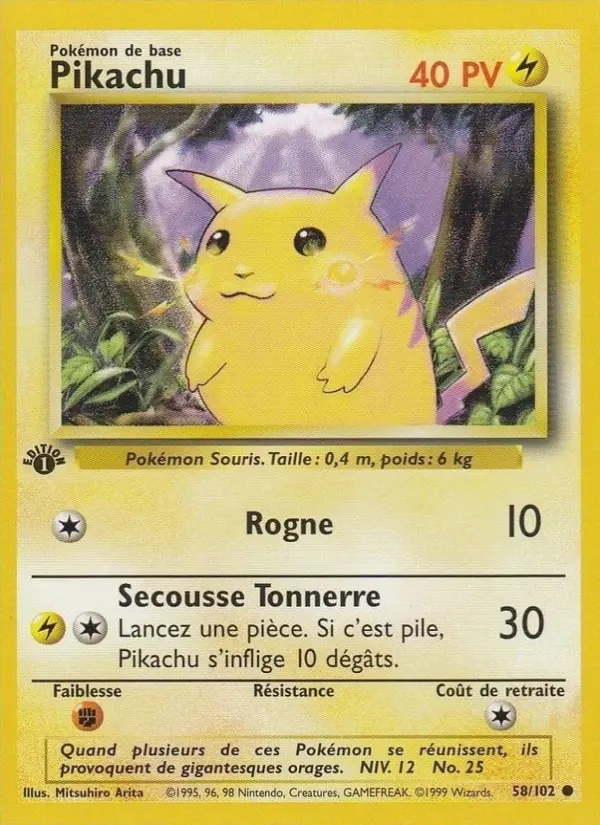
| ● Circle | Common | ~5-6 per booster | $0.02 - $0.10 |
| ◆ Diamond | Uncommon | ~3 per booster | $0.05 - $0.30 |
| ★ Star | Rare | 1 per booster | $0.20 - $5 |
| ★ Holo star | Holographic rare | ~1 in 3 boosters | $1 - $15 |
Modern rarities (since Scarlet & Violet)
Since the Scarlet & Violet series, the Pokemon TCG has introduced a new rarity system with more detailed symbols:
- Star + "D" (Double Rare) -- EX cards with a standard illustration. Value: $1 to $10
- Two silver stars (Illustration Rare) -- Cards with extended artwork filling the entire frame. Value: $5 to $30
- Two silver stars + (Special Illustration Rare / SAR) -- The most beautiful cards in the set with full-page art. Value: $15 to $100+
- Gold stars (Hyper Rare) -- The rarest cards in the set, often gold or textured variants. Value: $20 to $200+
Cards whose collection number exceeds the set total (for example 205/198) are Secret Rares -- these are the most sought-after and rarest cards in the expansion. To dive deeper into rarities and the value of French-print cards, our article on the rarest French Pokemon cards provides plenty of reference points.
Your first purchases: where to begin
It is time to take action. Here is a concrete, priority-ranked list of recommended first purchases.
1. Choose your first expansion
2026 is an exceptional year to start thanks to Pokemon's 30th anniversary. Several options are available:
- Mega Evolution -- Perfect Order (releasing March 27, 2026) -- The return of Mega Evolutions with Pokemon Legends Z-A. Perfect if you love Mega Evolutions.
- Ascended Heroes (released January 30, 2026) -- A massive special set of 290 cards with over 30 Special Illustration Rares. Ideal for art lovers.
- Pokemon Day 30th Anniversary Box -- An anniversary product featuring an exclusive holographic Pikachu. High sentimental value and strong collectability.
- Prismatic Evolutions -- Centred on Eevee and its evolutions, this set remains hugely popular and visually stunning.
2. Pick up an Elite Trainer Box (ETB)
The ETB is the single best product for a first purchase, hands down. For $45-65 depending on the expansion, you get:
- 9 to 11 booster packs from the same expansion
- 45 protective sleeves in the set's colours
- A die and damage counters
- An exclusive promo card
- A sturdy, decorative storage box
It is literally a complete starter kit. And unlike booster boxes, ETBs are never reprinted: once the print run sells out, they are gone. That means an ETB kept in good condition or left sealed can appreciate in value over time.
3. Round out with targeted singles
Once you have opened your boosters, take stock of what you pulled. List the missing cards, then head to Cardmarket or TCGPlayer to buy commons and uncommons for a few cents each. Save additional booster openings for the thrill, and use singles purchases for efficiency.
Open boosters for the thrill. Buy singles for completion. Combine both for the ultimate collector's happiness.
-- The golden rule of every experienced Pokemon collector
Protecting your cards: the highest-return investment
A poorly protected card loses value with every handling. A well-protected card retains it for decades. Protection is the single most cost-effective thing you can do as a collector, and it is a topic we cover in depth in our complete guide to Pokemon card preservation. Here are the essentials to get started.
Tiered protection system
The level of protection should match the card's value:
- Any card -- At minimum a penny sleeve (soft polypropylene sleeve). Negligible cost, protection against scratches and dust. Never use PVC sleeves, which release damaging acids.
- Rare cards ($1-20) -- Penny sleeve + rigid toploader (35pt for standard cards). The toploader prevents bending and impact damage.
- High-value cards ($20+) -- Perfect-fit sleeve + toploader, or even better: a magnetic one-touch case for maximum protection and elegant display.
- Organised collection -- A binder with built-in pages (side-loading) made of acid-free polypropylene. Avoid O-ring binders, which apply uneven pressure on the cards.
Storage conditions
Beyond physical protection, the environment matters enormously:
- Temperature -- Stable, between 18 and 22 degrees C (65-72 degrees F). Fluctuations cause condensation.
- Humidity -- Between 40 and 50% relative humidity. Below 30%, cardboard becomes brittle. Above 60%, mould becomes a risk.
- Light -- Never expose cards to direct sunlight. UV rays cause yellowing and ink fading.
- Location -- A cupboard in a lived-in room. Absolutely avoid attics, basements and garages.
The 7 beginner collector mistakes
Every experienced collector has made at least one of these mistakes early on. The advantage of reading this guide is that you can avoid all of them from the start.
- Not defining a collecting goal -- Buying at random with no direction leads to a disjointed collection and an empty wallet. Choose your angle (complete set, favourite Pokemon, specific era) before you start spending.
- Going all-in on boosters -- Opening booster packs is exciting, but it is also a form of lottery. To complete a set efficiently, buying singles is far more economical. Save boosters for the thrill of discovery, not for completion.
- Neglecting protection from day one -- Every card you pull from a booster should go into a sleeve immediately. A scratch on a holographic is irreversible. Sleeves cost $2 per hundred. There is no excuse.
- Buying from unverified channels -- Counterfeits are getting increasingly sophisticated. A "holographic first edition Charizard" for $20 on Facebook Marketplace is fake, full stop. Stick to reliable channels: official retailers, Cardmarket, TCGPlayer, eBay sellers with high feedback scores.
- Confusing sentimental value with market value -- Your Base Set Pikachu is not necessarily rare. Learn to check the actual market price of your cards on Cardmarket or TCGPlayer before getting overexcited. A card's condition is just as important as its identity.
- Not setting a monthly budget -- Opening boosters is addictive. A hundred dollars a month disappears fast when every store visit tempts you. Set an amount, hold to it, and you will enjoy the hobby long-term without financial stress.
- Collecting for the wrong reasons -- Buying "profitable" cards you don't actually like is the fastest route to burning out in three months. If a card doesn't excite you when you look at it, don't buy it, even if the internet says it will go up in value.
Getting started with grading: when and why to certify your cards
You may have heard terms like "PSA 10", "CGC 9.5" or "graded cards". Grading (or certification) involves sending a card to a professional organisation that evaluates its condition on a scale of 1 to 10, then encapsulates it in a tamper-proof protective case. A high grade can multiply a card's value dramatically. For a detailed comparison of grading services, see our article PSA vs CGC: which certification to choose.
The main grading services
| Service | Origin | Starting price | Key advantage |
|---|---|---|---|
| PSA | USA | ~$20-25 / card | Best resale value, global industry standard |
| CGC | USA | ~$15-20 / card | Detailed sub-grades, good value for money |
| PCA | France | Variable | Based in Europe, no customs fees, faster turnaround |
When is grading worth it?
Grading only makes economic sense when the raw card already holds significant value. As a rule of thumb:
- Raw card < $30 -- Grading often costs more than the potential uplift. Keep it in a toploader.
- Raw card $30-100 -- Worth considering if the condition is excellent and you are aiming for a PSA 9 or 10.
- Raw card > $100 -- Grading is strongly recommended. A PSA 10 can be worth 2 to 10 times more than the raw card.
For a beginner, grading is not an immediate priority. Focus first on building your collection and mastering protection. If you one day pull an exceptional card in near-perfect condition, you will know the option is there.
Your first 30 days as a collector: the action plan
To keep this guide practical rather than theoretical, here is a concrete week-by-week plan for your first 30 days as a Pokemon card collector.
- Week 1 -- FoundationsDefine and equip
Choose your collection angle (set, favourite Pokemon, etc.). Set your monthly budget. Order your first ETB and a pack of 100 penny sleeves. Create a free account on Cardmarket or TCGPlayer to start exploring prices.
- Week 2 -- DiscoveryOpen, sort, protect
Open your ETB and savour the moment. Sleeve every card immediately. Sort by rarity. Identify the rarity symbol on each card. Check the value of your best pulls on Cardmarket or TCGPlayer. Place rares in toploaders.
- Week 3 -- Deep diveComplete and learn
Take stock of your duplicates and gaps. Order your first singles to fill holes. Join a community: PokeCardex, Facebook groups or Discord servers. Learn how to spot fake cards.
- Week 4 -- ConsolidationOrganise and plan ahead
Organise your collection in a binder or storage boxes. Review your first month's spending. Plan your next purchases based on upcoming releases. Consider visiting a local game store or a Pokemon event.
Essential tools and resources
To track your collection, evaluate your cards and stay informed, here are the tools every collector should have in their toolkit:
- Cardmarket -- The European reference for checking prices and buying singles
- TCGPlayer -- The North American benchmark for market prices and singles shopping
- PokeCardex -- Complete card database, TCG news and community forum
- Pokepedia -- The French-language Pokemon encyclopaedia for in-depth rarity, set and TCG history info
- Scan apps -- Apps like Pokemon TCG Card Dex let you scan your cards and manage your collection digitally
Why 2026 is the perfect year to start
If you were still hesitating on timing, know that 2026 is no ordinary year for the Pokemon TCG. Several factors converge to make it a particularly exciting moment:
- Pokemon's 30th anniversary -- Special products, collaborations (LEGO, Adidas, Uniqlo) and global events mark this historic year. Anniversary editions are historically among the most sought-after over the long term.
- The return of Mega Evolutions -- With Pokemon Legends Z-A and the Mega Evolution TCG series, a fan-favourite mechanic is making its grand comeback.
- The first simultaneous worldwide launch -- Planned for late 2026, a set will receive a coordinated release in all languages at the same time, a historic first.
- A mature and accessible market -- The TCG market is valued at $7.8 billion and continues to grow at 7.9% per year. The ecosystem (shops, platforms, communities) has never been more developed.
Conclusion: jump in, the time is right
Starting a Pokemon card collection in 2026 means joining a worldwide community of enthusiasts at a pivotal moment in the franchise's history. The hobby is accessible at every budget, delivers instant gratification (nothing beats cracking a booster pack) and can become a smart investment if you make the right calls.
Remember the fundamentals: define your goal before buying, set a budget and stick to it, protect every card the moment it comes out of a pack, buy singles to complete sets efficiently, and above all, collect what you love. Passion is the best engine, and it is what will keep your collection going for years.
At Cards N Packs, we have been passionate about vintage and graded Pokemon cards for years. If you are looking for quality pieces to start or expand your collection, feel free to browse our catalogue -- every card is stored in optimal conditions and shipped with maximum protection.
The only real mistake you can make is not starting at all. So open your first ETB, sleeve up those cards, and welcome to the adventure.
Frequently asked questions
How much should I budget to start a Pokemon card collection?
You can start with as little as 50 dollars: an Elite Trainer Box (45-65 dollars) gives you 9 to 11 booster packs, protective sleeves, a die and a storage box. For a more comfortable start, budget between 100 and 200 dollars to add protection accessories (sleeves, toploaders, binder) and a few individual cards. Budgets of 500 dollars and above allow you to pick up a sealed booster box and start targeting higher-value pieces.
Should I open booster packs or buy individual cards?
Both approaches complement each other. Opening boosters delivers the thrill of discovery and lies at the heart of the collecting experience. However, to complete a set or obtain a specific card, buying singles on platforms like Cardmarket or TCGPlayer is far more cost-effective. The most efficient strategy is to open boosters for the fun and buy the missing cards individually.
How do I tell the rarity of a Pokemon card?
The rarity symbol is located at the bottom right of each card. A black circle marks a common card, a black diamond an uncommon, and a black star a rare. Since the Scarlet & Violet series, new symbols have been introduced: a star with a D for double rares, two silver stars for illustration rares, and gold stars for hyper rares and special rares.
What is the best Pokemon set to start collecting in 2026?
In 2026, the 30th-anniversary products are must-haves for their historical value. Among recent expansions, Mega Evolution Perfect Order (March 2026) is an excellent choice with the return of Mega Evolutions. Prismatic Evolutions remains popular thanks to the Eeveelutions. The key is to choose a set whose visual world speaks to you, because passion is the engine of any lasting collection.
Do Pokemon cards go up in value over time?
Some cards do appreciate in value, but not all. The key factors are print-run rarity, condition, the popularity of the featured Pokemon and collector demand. Vintage cards, first editions and PSA 10 graded cards tend to appreciate the most. That said, collecting purely to speculate is risky. Collect out of passion first.
Where can I buy Pokemon cards without getting scammed?
Favour established retail chains (Target, Walmart, GameStop, or Cultura and Micromania in Europe), reputable online stores and Cardmarket (Europe) or TCGPlayer (US) for singles. On eBay, always check the seller's positive feedback score. Be wary of offers that seem too good to be true on social media, and learn how to spot counterfeits.
Read next
 GUIDES
 GUIDES
 GUIDES